
Best Dark Spot & Melasma Treatments for Tropical Climates: Why Vitamin C Oxidizes & How Tranexamic Acid + α-Arbutin Blocks Melanin Pathways

Dr. Evelyn Lim
Lead Formulator & Dermal Biochem Scientist at SYUEO Lab
The Equatorial Pigmentation Trap: Why Tropical Melanin Resists Standard Western Skincare
Living in Southeast Asia—whether in Kuala Lumpur, Singapore, or Bangkok—means facing an equatorial solar environment where the daily UV Index regularly peaks between 11 and 13. However, UV radiation is only half of the challenge. The combination of ambient temperatures exceeding 32°C and relative humidity hovering around 80% creates a localized microclimate that fundamentally alters topical drug and cosmetic delivery on Asian skin (Fitzpatrick skin types III to IV).
When heat triggers sustained cutaneous vasodilation, dermal mast cells and microvascular endothelial cells release inflammatory mediators, particularly plasminogen and prostaglandins. On Asian Fitzpatrick skin types, melanocytes possess larger melanosomes that are biochemically hyper-reactive. Even minor friction, post-acne erythema, or thermal stress instantly signals melanocytes to overproduce eumelanin, transforming minor blemishes into stubborn dark grey or brownish post-inflammatory hyperpigmentation (PIH).
Compounding this issue is the common clinical failure of Western-formulated 'high-dose pure Vitamin C' (15% to 20% L-Ascorbic Acid) in tropical regions. Formulated at an acidic pH below 3.5 to penetrate, pure ascorbic acid strips the skin's moisture mantle. In tropical heat, excessive sweat and oxidized sebum rapidly degrade unbuffered ascorbic acid on the stratum corneum into dehydroascorbic acid and erythrulose—the exact staining compound found in self-tanning lotions. By 2 PM to 3 PM, many users notice their face turning distinctly dull, greasy, and orange-tinted rather than luminous.
“Dr. Evelyn Lim, Dermal Biochemist: 'In hot and humid climates, treating pigment with harsh, low-pH acids creates micro-inflammation that accelerates melanogenesis. Tropical brightening requires photostable, non-acidic signal blockers like Tranexamic Acid and α-Arbutin that shut down enzymatic activation without destabilizing the stratum corneum.'”
The 4-Stage Melanin Cascade: Why Single-Target Bleaching Agents Inevitably Rebound
To understand why stubborn hormonal melasma and recalcitrant acne marks refuse to fade, one must examine the 4-stage biological cascade of melanogenesis. Melanin formation is not an isolated chemical reaction; it is an orchestrated defense cascade triggered across distinct cellular compartments.
Stage 1: Upstream Signal Reception (α-MSH & MC1-R Activation)
When keratinocytes absorb UV radiation or heat stress, they synthesize alpha-melanocyte-stimulating hormone (α-MSH) and endothelin-1. These hormones bind to the Melanocortin 1 Receptor (MC1-R) located on the melanocyte cell membrane, switching on the MITF transcription factor.
Stage 2: Microvascular & Inflammatory Triggering (Plasmin Cascade)
Thermal heat and subclinical barrier damage activate plasminogen into plasmin. Plasmin increases free arachidonic acid and prostaglandin E2 (PGE2), directly stimulating melanocyte dendrite branching and accelerating melanosome generation.
Stage 3: Enzymatic Oxidation (Tyrosinase Catalysis)
Inside the melanosome, the copper-dependent rate-limiting enzyme tyrosinase hydroxylates L-tyrosine into L-DOPA, and rapidly oxidizes L-DOPA into dopaquinone. Without direct competitive inhibition, this pathway cascades uncontrollably into dark eumelanin deposits.
Stage 4: Melanosome Dendritic Transfer & Epidermal Deposition (PAR-2 Pathway)
Mature eumelanin-packed melanosomes travel along melanocyte dendritic arms and are transferred into surrounding keratinocytes via Protease-Activated Receptor 2 (PAR-2). As keratinocytes ascend toward the stratum corneum, visible dark spots and mottled patches become visible on the skin surface.
Comprehensive Active Ingredient Evaluation: Biological Targets & Tropical Stability
Not all brightening molecules perform equally when challenged with heat, UV exposure, and sebum. The following peer-reviewed comparative analysis evaluates the five foremost depigmenting agents used in dermatological formulation, benchmarking their stability, mechanism of action, and clinical tolerance on Asian skin types.
| Active Ingredient | Cascade Target & Mechanism | Photostability at 32°C / 80% RH | Barrier Tolerance & Irritation Risk | Primary Clinical Indication |
|---|---|---|---|---|
| Pure L-Ascorbic Acid (15%-20%) | Downstream antioxidant; reduces dopaquinone back to DOPA. | Poor (rapidly degrades into yellow dehydroascorbic acid upon oxygen/sebum exposure). | High risk on sensitized barriers due to obligatory low pH (<3.5). | General photodamage on resilient, non-sensitive, dry skin types. |
| Tranexamic Acid (凝血酸/传明酸) | Inhibits plasminogen binding; suppresses arachidonic acid and prostaglandins (Stage 2). | Exceptional (synthetic amino acid derivative, zero photodecomposition). | Superior; physiological neutral pH (6.0-7.0), zero stinging, anti-erythema. | Vascular melasma, persistent red-to-brown post-acne marks (PIE/PIH), heat-induced flushing. |
| High-Purity α-Arbutin | Reversible competitive tyrosinase active-site inhibitor (Stage 3). | High; 10x more stable and potent than beta-arbutin, does not release free hydroquinone. | Excellent; well-tolerated on Asian Fitzpatrick III-IV skin without cytotoxicity. | Stubborn sun freckles, solar lentigines, dark epidermal melanin deposits. |
| Biomimetic Nonapeptide-1 | Competitive antagonist to α-MSH at MC1-R cell surface receptor (Stage 1). | Outstanding; highly stable peptide chain, impervious to daytime ambient light. | Zero irritation; works purely at cell-signaling level without chemical exfoliation. | Preventing post-laser pigmentation rebound, acute UV melanogenesis triggering. |
| 3-O-Ethyl Ascorbic Acid (EAA) | Lipophilic Vitamin C ether; direct tyrosinase inhibition and dermal collagen synthesis. | Excellent; stable against oxidation up to 45°C, does not stain sebum yellow. | High tolerance; effective at neutral pH (5.0-6.5) with over 80% active conversion. | Daytime antioxidant protection, dull sallowness, synergizing with Tranexamic Acid. |
The Clinical Protocol: 3-Step Multi-Target Brightening Regimen for Tropical Climates
Rather than applying single mega-dose actives that overwhelm the dermal barrier, clinical dermatologists recommend a synchronized multi-pathway strategy. By targeting signal reception, vascular inflammation, and enzymatic synthesis simultaneously, pigmentation can be resolved safely without triggering rebound melasma.
Morning Shield: Signal Interception + Photostable UV Defense
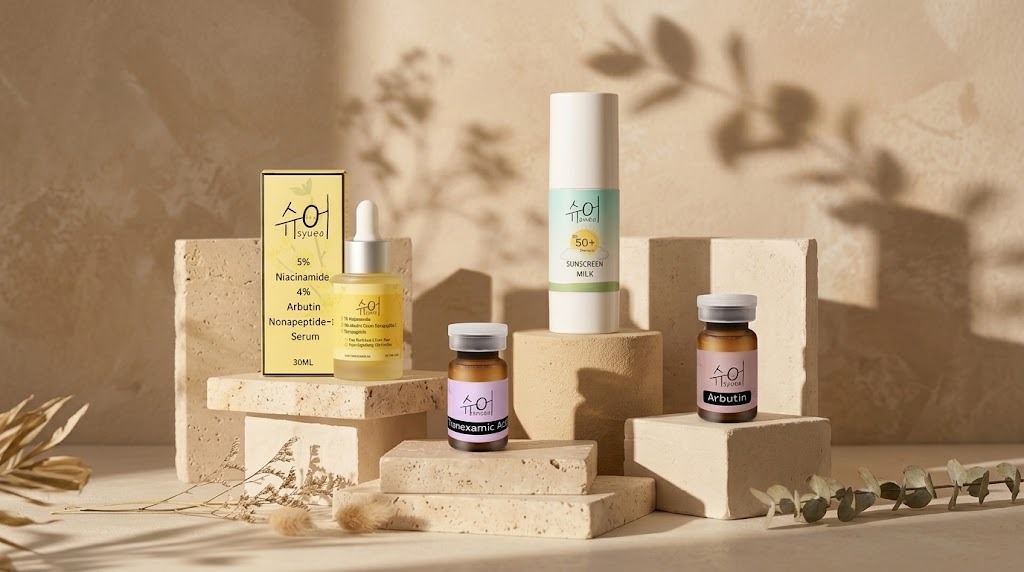
After gentle cleansing, apply 4 to 5 drops of 5% Niacinamide 4% Arbutin Nonapeptide-1 Serum. Nonapeptide-1 locks onto the MC1-R receptor to prevent daylight UV from signaling melanocytes, while 5% Niacinamide blocks PAR-2 melanosome transfer and carnosine protects against sugar-induced collagen glycation (yellow dullness). Follow immediately with a lightweight layer of Broad-Spectrum Multi-Defense Sunscreen Milk SPF50+ PA++++, which combines Tinosorb S and Buddleja extract to block UV, heat, and high-energy visible (HEV) blue light without sweating off.
Evening Intensive Treatment: Plasmin Deactivation & Cellular Reversal
In the evening when the skin initiates regenerative cellular repair, apply half a vial of Tranexamic Acid Ampoules Plus across areas affected by melasma, acne scars, and uneven pigmentation. The sterile, pharmaceutical-grade ampoule delivers concentrated Tranexamic Acid, Nonapeptide-1, and 3-O-Ethyl Ascorbic Acid directly to the microvascular base of the hyperpigmentation, switching off plasmin activity and dissolving stubborn dark clusters. For stubborn solar spots with microcapillary redness, alternate with α-Arbutin Ampoules Plus containing Horse Chestnut extract.
Weekly Occlusive Infusion: Alginate Salon Modeling Mask
Once or twice weekly, prepare a fresh professional peel-off modeling mask using Nicotinamide Modeling Mask. The occlusive alginate matrix cools the skin temperature by 3°C to 5°C, suppressing vascular dilation while forcing active brightening molecules past the stratum corneum barrier via osmotic pressure, boosting clinical ingredient absorption by over 280%.
4 Critical Pitfalls That Worsen Melasma and Dark Spots in Tropical Environments
Dermatological clinics in Southeast Asia frequently treat patients whose pigmentation worsened significantly after attempting aggressive self-treatment. Avoid these four widespread clinical mistakes:
1. Over-Exfoliating With High-Strength AHA/Glycolic Chemical Peels
In hot climates, using 20% to 30% glycolic acid peels creates substantial barrier breakdown. On Asian Fitzpatrick III to IV skin, chemical burns invariably trigger intense inflammatory cytokines, causing dark, mottled PIH that can take 12 to 24 months to clear.
2. Layering Pure L-Ascorbic Acid Directly Under Daytime Sun in High Humidity
When pure Vitamin C interacts with sweat and lipid peroxidases in equatorial sunlight, it quickly oxidizes into dehydroascorbic acid on the skin surface. This not only forms a temporary orange-yellow film on the face, but also generates reactive oxygen species (ROS) that exhaust the skin's endogenous glutathione reserves.
3. Treating Melasma Merely as Epidermal Pigment While Ignoring Vascular Inflammation
Melasma is not just melanin; clinical biopsies show dense clusters of dilated, tortuous micro-capillaries underneath melasma patches. Using bleaching agents alone fails because vascular endothelial growth factor (VEGF) continues to feed melanocytes. Tranexamic Acid is essential because it directly addresses this microvascular component.
4. Skipping Sunscreen on Overcast or Rainy Monsoon Days
Monsoon cloud cover filters only 15% to 20% of UV radiation. Long-wavelength UVA rays (340nm-400nm) penetrate clouds and office glass completely unabated, driving continuous melanin synthesis even during torrential tropical downpours.
Frequently Asked Questions (FAQ)
Q.Can Tranexamic Acid be safely used during the daytime without causing photosensitivity?
Yes, absolutely. Unlike Retinoids, Glycolic Acid, or harsh bleaching agents, Tranexamic Acid is a synthetic lysine derivative that works as an anti-inflammatory and plasmin inhibitor. It is completely photostable, non-acidic (pH 6.0-7.0), and non-photosensitizing. You can safely use it morning and evening, provided you apply broad-spectrum SPF50+ sunscreen during the day to prevent UV-induced melanin activation.
Q.Why do red acne marks (PIE) turn into dark brown spots (PIH) so quickly in tropical heat?
Post-inflammatory erythema (PIE) consists of dilated, damaged micro-capillaries left behind after an inflammatory acne blemish. In tropical climates, elevated temperatures cause sustained vasodilation, while intense UV rays trigger mast cells to release plasmin and prostaglandins. On Asian Fitzpatrick skin types, this constant vascular inflammation rapidly triggers nearby hyper-reactive melanocytes to dump eumelanin into the dermis, converting red marks into stubborn brown PIH.
Q.What is the difference between Tranexamic Acid Ampoules Plus and α-Arbutin Ampoules Plus?
Tranexamic Acid Ampoules Plus specifically targets the vascular and inflammatory triggers of pigmentation, making it the primary choice for hormonal melasma, butterfly patches, and stubborn post-acne marks (PIE/PIH). α-Arbutin Ampoules Plus focuses on direct competitive inhibition of the tyrosinase enzyme, making it exceptionally potent against ultraviolet-induced solar lentigines, sun freckles, and localized epidermal pigment spots. Alternating both provides full-spectrum coverage.
Q.Can I still use Vitamin C? How does 3-O-Ethyl Ascorbic Acid differ from pure L-Ascorbic Acid?
Yes, Vitamin C remains an indispensable antioxidant, but the molecular form is critical in hot and humid climates. Pure L-ascorbic acid requires a pH below 3.5 and degrades rapidly in heat, often staining sebum orange-yellow by afternoon. 3-O-Ethyl Ascorbic Acid (EAA) is an ether-modified derivative that is lipophilic and hydrophilic. It remains chemically stable up to 45°C at neutral pH, penetrates deeper without barrier stinging, and converts inside the dermis into active ascorbic acid without oxidizing on your skin.
Q.How long does it realistically take to see visible fading of stubborn melasma and dark spots?
Because natural epidermal cellular turnover requires approximately 28 to 40 days in adults, superficial post-acne marks typically show visible lightening within 2 to 4 weeks of consistent multi-target therapy. Deep dermal melasma and chronic solar lentigines, which involve basement membrane damage and microvascular dilation, require a continuous 8 to 12-week clinical protocol using Tranexamic Acid and rigorous broad-spectrum SPF protection for substantial clearance.
Featured Formulations Mentioned In This Article
Tranexamic Acid Ampoules Plus
Medical-Grade Tranexamic Acid + Nonapeptide-1 + Niacinamide + 3-O-Ethyl Ascorbic Acid + Rice Ferment + Glutathione & Resveratrol | 3ml × 6
α-Arbutin Ampoules Plus
High-Purity α-Arbutin + Rosa Centifolia Flower Water + Aesculus Hippocastanum Microvascular Support + Ascorbyl Glucoside AA2G | 3ml × 6
5% Niacinamide 4% Arbutin Nonapeptide-1 Serum
Biomimetic Nonapeptide-1 (MC1-R Blocker) + 4% Arbutin + 5% Niacinamide + Carnosine Anti-Glycation + 3D Aquaxyl | 30ml
Broad-Spectrum Multi-Defense Sunscreen Milk SPF50+ PA++++
Photostable Tinosorb S + Uvinul A Plus + Titanium Dioxide + Dunaliella Salina + Buddleja Blue Light Shield | 50ml
Related Clinical Guides In This Pillar
How Hyperpigmentation, Melasma, and Dark Spots Form: The 4-Stage Melanin Cascade & Clinical Brightening Protocol
A clinical dermatology guide to dark spots, vascular melasma, post-acne hyperpigmentation (PIH), and yellow glycation sallowness. Learn how melanin forms across 4 biological stages and how to fade stubborn pigment without compromising your skin barrier.
How a Damaged Skin Barrier Forms and How to Rebuild It: Stratum Corneum Lipid Science & Clinical Protocol
A damaged skin barrier forms when intercellular lipids (ceramides, cholesterol, and fatty acids) are stripped, spiking trans-epidermal water loss and neurogenic stinging.
Clogged Pores, Oxidized Blackheads, and Recurring Breakouts: From Sebaceous Hyperactivity to Dual-Phase BHA/PHA & Oligopeptide Resolution
Clogged pores and recurring acne form through a four-stage follicular cascade—5α-reductase sebum excess, squalene oxidation, hyperkeratinization, and C. acnes inflammation.
Clinical Disclaimer: The topical protocols, biological mechanisms, and formulation data published in this journal are developed by the SYUEO Formulation Laboratory for aesthetic education and professional guidance. Individuals with chronic dermatological conditions (e.g. severe rosacea, open cystic lesions, or active eczema) should consult a certified dermatologist before starting any intensive active protocol.
© 2026 SYUEO Apothecary & Botanical Skincare Lab. All rights reserved. Registered Entity: SYUEO MALAYSIA EMPIRE (SSM Registration: 003593452-M).