
Skinimalism in Tropical Climates: Why 7-Layer Skincare Causes Breakouts & 5 Practical Application Techniques for Healthy Skin

Dr. Evelyn Lim
Lead Formulator & Dermal Biochem Scientist at SYUEO Lab
The Layering Trap: Why Excessive Skincare Inevitably Backfires in High Humidity
In tropical regions like Malaysia, Singapore, and Thailand, ambient temperatures routinely exceed 32°C alongside relative humidity above 80%. Every 1°C increase in cutaneous temperature accelerates the sebum excretion rate by roughly 10%. Under these conditions, the skin's surface already contends with abundant endogenous triglycerides, squalene, and free fatty acids.
Applying a six-to-eight-step skincare regimen under high heat introduces substantial quantities of secondary formulation vehicles: synthetic emulsifiers, thickeners such as carbomer and xanthan gum, film-forming polymers, and multiple preservative systems. Because sweat and ambient humidity impede normal water evaporation, these occlusive polymers sit atop the skin, trapping partially oxidized sebum at the pilosebaceous duct orifice. The outcome is persistent micro-comedones, textural roughness, and follicular irritation.
True skinimalism focuses on reducing unnecessary auxiliary chemicals that stress the epidermal acid mantle. By supplying only biologically identical barrier lipids, such as ceramides in physiological ratios, and photostable UV shields, the skin can recalibrate its endogenous moisture retention capacity without relying on dozens of competing active ingredients.
“Dr. Evelyn Lim, Dermal Biochemist: 'Layering seven distinct products also means layering seven preservative systems and dozens of emulsifiers. In equatorial humidity, skin irritation rarely stems from a lack of hydration; it stems from chemical overcrowding on the stratum corneum.'”
Excessive Multi-Step Routine vs. Clinical Skinimalist Regimen: Biological Markers
Comparing a traditional heavy cosmetic routine with a streamlined clinical regimen illustrates the direct impact on stratum corneum integrity, trans-epidermal moisture loss, and pore clarity.
| Evaluation Metric | Heavy Multi-Layer Routine (6-8 Steps) | Targeted Skinimalist Protocol (2-3 Steps) | Underlying Biological Mechanism |
|---|---|---|---|
| Pore Clarity & Comedone Risk | High rate of closed comedones and folliculitis. | Open, unobstructed follicular ducts. | Minimizes synthetic esters, heavy waxes, and carbomer buildup that physically obstruct sebum flow. |
| Trans-Epidermal Water Loss (TEWL) | Fluctuates erratically due to impaired barrier cohesion. | Stabilizes within the healthy 8-12 g/h/m² range. | Supports natural lipid bilayers using physiological 3:1:1 ceramides rather than superficial humectants. |
| Ingredient Conflict & Stinging | Frequent redness and subclinical tingling from competing pH levels. | High cutaneous tolerance with zero stinging. | Prevents acidic actives from destabilizing peptide conformations and eliminates preservative overload. |
| Afternoon Oxidation & Greasiness | Severe T-zone oiliness and dull yellowish makeup breakdown by 2 PM. | Subtle glow without greasy surface pooling. | Avoids stacking foreign oils that rapidly undergo thermal lipid peroxidation under tropical UV. |
The Clinical Regimen: Morning 2-Step and Evening 3-Step Protocol
A targeted routine eliminates redundancies while delivering complete barrier nourishment. This protocol adapts to equatorial heat without compromising photoprotection or lipid repair.
Morning Step 1: Lightweight Antioxidant Fluid
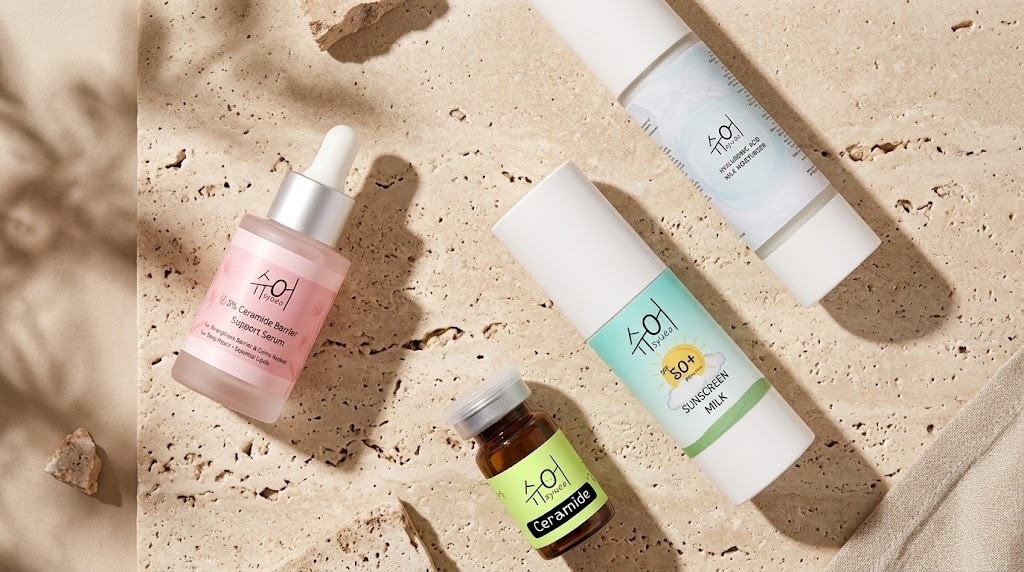
Following a lukewarm water rinse, apply 3 to 4 drops of a water-soluble antioxidant serum such as 3% Ceramide Barrier Support Serum or 5% Niacinamide 4% Arbutin Nonapeptide-1 Serum. This supplies humectants, physiological lipids, and free-radical defense without heavy film formers. For oily or combination skin in tropical humidity, there is no need for a separate morning moisturizer.
Morning Step 2: Broad-Spectrum Photostable Sunscreen Milk
Wait 90 seconds for the serum to settle, then apply a nickel-sized amount of Broad-Spectrum Multi-Defense Sunscreen Milk SPF50+ PA++++. Modern photostable sunscreens formulated with Tinosorb S and Uvinul A Plus already contain conditioning emollients that lock in hydration while creating a sweat-resistant barrier against UV and environmental particulates.
Evening Step 1: Gentle Amino Acid Cleansing
Cleanse with a mild, non-foaming or weakly acidic amino acid cleanser to dissolve accumulated airborne grime and sunscreen residue. Avoid harsh sulfates or physical scrub beads that strip intracellular stratum corneum lipids.
Evening Step 2: Targeted Barrier Ampoule
When dealing with environmental redness, post-acne erythema, or sunburn, apply half a vial of Ceramide Ampoules Plus. Concentrated, preservative-free ampoules deliver triple ceramides, phytosterols, and horse chestnut extract directly to stressed micro-vessels without superfluous cosmetic fillers.
Evening Step 3: Zone-Specific Lightweight Lipid Emulsion
Dispense a pea-sized drop of Hyaluronic Acid Milk Moisturizer. Smooth across the cheeks and neck where trans-epidermal water loss is highest, then lightly pat any remaining trace over the T-zone.
5 Practical Application Techniques to Optimize Skincare Efficacy
Formulation quality matters, but how products are handled and applied directly dictates whether actives absorb or cause cosmetic friction. Incorporate these five clinical techniques into your daily routine:
1. Never Allow Dropper Pipettes to Contact Skin Surface
Pressing an open glass dropper directly against cheeks transfers Cutibacterium acnes, Malassezia yeasts, and exfoliated surface keratinocytes back into the bottle. Over several weeks, this overwhelms the preservative system, degrading active ingredients. Always hold the dropper two to three centimeters away from your palm, dispense, and apply with clean fingertips.
2. Apply Hydrophilic Hydrators onto Slightly Damp Skin
Humectants such as sodium hyaluronate, glycerin, and panthenol function by binding available ambient water molecules. If applied to a bone-dry face, especially in an air-conditioned room, high-potency humectants can draw water outward from deeper viable epidermal layers. Pat your face until moist, not dripping, and apply your serum within 30 seconds of cleansing.
3. Observe the 90-Second Film-Forming Interval Before Sunscreen
Sunscreen requires an undisturbed cosmetic matrix to form a cohesive, uniform photoprotective film across the stratum corneum. If applied immediately over damp emulsion or sticky serums, the incompatible water-oil phases disrupt the sunscreen's polymer network, resulting in patchiness, pilling, and diminished UV protection.
4. Practice Anatomical Zone Partitioning Rather Than Uniform Application
Sebaceous gland density on the forehead and nose reaches 400 to 900 glands per square centimeter, compared to fewer than 100 on the cheeks. Avoid slathering equal amounts of moisturizer everywhere. Distribute lipids across the drier lateral cheeks and jawline first, and only use residual moisture on your fingertips to tap the T-zone.
5. Respect Biochemical Active Compatibility Windows
Do not combine delicate biomimetic peptides (such as GHK-Cu copper peptides or Nonapeptide-1) simultaneously with low-pH chemical exfoliants (20% glycolic acid, 2% salicylic acid, or pure 15% ascorbic acid). Acidic environments alter the tertiary molecular conformation of peptide chains, rendering them functionally inert.
Frequently Asked Questions (FAQ)
Q.Should I skip morning cleanser entirely when practicing skinimalism?
It depends on your waking cutaneous condition. For dry, normal, or sensitized skin that rested in an air-conditioned bedroom, a lukewarm water splash is sufficient to preserve the natural physiological lipid mantle produced overnight. However, if your T-zone wakes up distinctly oily, use a dime-sized amount of gentle amino acid cleanser on the forehead and nose for 15 seconds, leaving the drier cheeks unwashed.
Q.How long can an opened sterile ampoule be safely stored without spoiling?
Sterile cosmetic ampoules prioritize high ingredient purity without traditional heavy preservative systems. Once the neck is opened, invert the cap firmly or store the vial inside an airtight, shaded case. An opened ampoule should be completely used within 24 to 48 hours to avoid microbial contamination and oxidation of active fractions.
Q.Can I use sheet masks while repairing a damaged barrier and dealing with closed comedones?
It is best to pause traditional sheet masks during acute barrier vulnerability. The prolonged occlusive wet environment forces excessive hydration (maceration) into stratum corneum corneocytes, loosening intercellular lipids and allowing preservatives and fragrance fixatives in sheet mask broths to trigger folliculitis. Switch instead to targeted ceramide ampoules or professional alginate modeling masks.
Q.Will reducing my skincare routine to two or three products cause rebound dryness?
No. The skin's stratum corneum maintains an innate lipid bilayer made of ceramides, cholesterol, and free fatty acids that retains moisture far more effectively than superficial layers of cosmetic lotion. Removing redundant emulsifiers allows the acid mantle to re-establish physiological equilibrium. Within 7 to 14 days, skin typically feels softer and less prone to midday tightness.
Q.How soon can I expect skin texture and closed comedones to clear after adopting skinimalism?
Because follicular turnover and keratinocyte shedding occur over approximately 28 to 35 days, textural relief usually begins within 10 to 14 days as micro-occlusions from heavy cosmetics clear out. Persistent closed comedones will soften and shed naturally alongside normal epidermal desquamation over a four-week cycle.
Featured Formulations Mentioned In This Article
3% Ceramide Barrier Support Serum
Full-Spectrum 5-Ceramide Matrix (NP, AS, NS/NG, AP, EOP) + Physiological Cholesterol + Asiaticoside + Soymilk Postbiotic | 30ml
Hyaluronic Acid Milk Moisturizer
Multi-Molecular Weight Hyaluronate + Hydrolyzed Jojoba Esters + Panthenol B5 Lightweight Barrier Lotion | 100ml
Broad-Spectrum Multi-Defense Sunscreen Milk SPF50+ PA++++
Photostable Tinosorb S + Uvinul A Plus + Titanium Dioxide + Dunaliella Salina + Buddleja Blue Light Shield | 50ml
Ceramide Ampoules Plus
Triple Ceramide Complex (NP, AP, NS) + Phytosterols + Horse Chestnut Microvascular Support + Aquaporin-3 Glyceryl Glucoside | 3ml × 6
Related Clinical Guides In This Pillar
How a Damaged Skin Barrier Forms and How to Rebuild It: Stratum Corneum Lipid Science & Clinical Protocol
A damaged skin barrier forms when intercellular lipids (ceramides, cholesterol, and fatty acids) are stripped, spiking trans-epidermal water loss and neurogenic stinging.
Dehydrated Oily Skin in Air-Con Offices: Why Face Misting Makes It Worse & How 3% Ceramide 3:1:1 Lipid Therapy Fixes It
A clinical guide to resolving dehydrated oily skin in tropical air-conditioned offices. Understand why low humidity accelerates TEWL, why mineral water sprays trigger rebound oiliness, and how 3% 5-ceramide serum and triple ceramide rescue ampoules repair the stratum corneum.
Clogged Pores, Oxidized Blackheads, and Recurring Breakouts: From Sebaceous Hyperactivity to Dual-Phase BHA/PHA & Oligopeptide Resolution
Clogged pores and recurring acne form through a four-stage follicular cascade—5α-reductase sebum excess, squalene oxidation, hyperkeratinization, and C. acnes inflammation.
Clinical Disclaimer: The topical protocols, biological mechanisms, and formulation data published in this journal are developed by the SYUEO Formulation Laboratory for aesthetic education and professional guidance. Individuals with chronic dermatological conditions (e.g. severe rosacea, open cystic lesions, or active eczema) should consult a certified dermatologist before starting any intensive active protocol.
© 2026 SYUEO Apothecary & Botanical Skincare Lab. All rights reserved. Registered Entity: SYUEO MALAYSIA EMPIRE (SSM Registration: 003593452-M).