How to Mix Salon Peel-Off Modeling Mask at Home Without Clumping: Golden Water-to-Powder Ratio & Professional Peeling Guide (2026)

Dr. Evelyn Lim
Lead Formulator & Dermal Biochem Scientist at SYUEO Lab
1. Why Modeling Masks Clump or Run: The Biophysical Chemistry of Alginate Cross-Linking
Clinic-grade modeling masks (commonly referred to as rubber masks or peel-off alginate masks) do not solidify through water evaporation like clay masks, nor do they rely on synthetic film-formers like polyvinyl alcohol. Instead, they transform from a liquid sol to an elastic hydrogel through an irreversible ionic cross-linking reaction between sodium alginate and calcium sulfate dihydrate (CaSO4·2H2O).
Sodium alginate consists of linear copolymer blocks of beta-D-mannuronate (M-blocks) and alpha-L-guluronate (G-blocks). When water is introduced, divalent calcium ions (Ca2+) rapidly displace monovalent sodium ions, slotting into the folded electronegative cavities formed by paired G-blocks. This forms the structural foundation known in macromolecular chemistry as the egg-box junction model. When water is added slowly or stirred sluggishly, calcium ions saturate localized pockets unevenly, locking unhydrated powder inside rubbery clumps while the surrounding liquid remains runny.
2. The Golden Ratio: Too Watery vs. Too Dry vs. Aesthetician Perfection
Achieving the ideal paste texture determines whether your mask drips down your neck, solidifies in the rubber bowl, or glides effortlessly across facial contours. The table below analyzes the three common mixing consistencies based on rheological viscosity and clinical usability:
| Consistency Metric | Too Watery (Ratio > 1:1.5 by weight/volume) | Too Dry / Thick (Ratio < 1:0.9 by weight/volume) | Golden Ratio (1:1 to 1:1.33 powder to water) |
|---|---|---|---|
| Water to Powder Benchmark | 25g powder mixed with >40ml liquid | 25g powder mixed with <20ml liquid | 25g powder mixed with 25ml to 33ml chilled liquid |
| Physical Texture | Runny soup, slips off spatula, splashes | Chalky paste, gritty crumbly lumps | Silky ribbon, glossy Greek yogurt density |
| Working Time Window | Very slow gelation (exceeds 8 minutes) | Premature gelation in bowl under 30 seconds | Generous 3 to 4 minutes of smooth application time |
| Perimeter Edge Integrity | Feathers into ultra-thin, brittle film | Uneven clumps that stick to skin dryly | Cohesive 2.5mm to 3mm edge perimeter |
| Removal Experience | Tears into messy shreds; requires washing | Tears painfully; leaves powdery patches | Lifts off cleanly in one single unbroken sheet |
3. Liquid Selection & Temperature Physics: Why Warm Water Destroys Your Mixture
Temperature plays a crucial role in reaction kinetics. Chemical reaction velocity doubles or triples with every 10°C increase according to Arrhenius principles. Mixing modeling powder with warm water (30°C or higher) accelerates calcium ion dissolution dramatically, causing instantaneous cross-linking within 45 seconds while the paste is still in your mixing bowl.
Using chilled purified water or biological floral hydrosol between 15°C and 18°C slows ionic exchange, granting you a relaxed 3 to 4 minute application window. Chilled temperatures also induce mild vasoconstriction, reducing facial puffiness and calming dermal capillary erythema. Furthermore, avoid unfiltered tap water. Municipal tap water contains fluctuating concentrations of chlorine, calcium carbonate, and heavy metals that disrupt ionic balance and irritate sensitized skin barriers.
4. The Aesthetician Vacuum Occlusion Secret: Layering Active Ampoules Under Alginate
In professional spas, modeling masks are never applied onto dry or bare skin. The cured alginate rubber creates a zero-evaporation physical seal with a trans-epidermal water loss rate (TEWL) close to zero g/m²/h. At the same time, the weight of the 2mm to 3mm rubber layer generates gentle downward hydrostatic pressure between 0.5 and 1.5 mmHg.
This micro-pressure slightly dilates cellular interstitial spaces and forces topical actives deep into the stratum corneum. Applying a high-potency sterile treatment such as Ceramide Ampoules Plus or active peptide serums immediately before spreading the alginate paste increases active molecule uptake by up to 500% compared to standard topical rubbing.
5. Step-by-Step Salon Mixing Protocol: Five Rules for a Flawless Single-Piece Peel
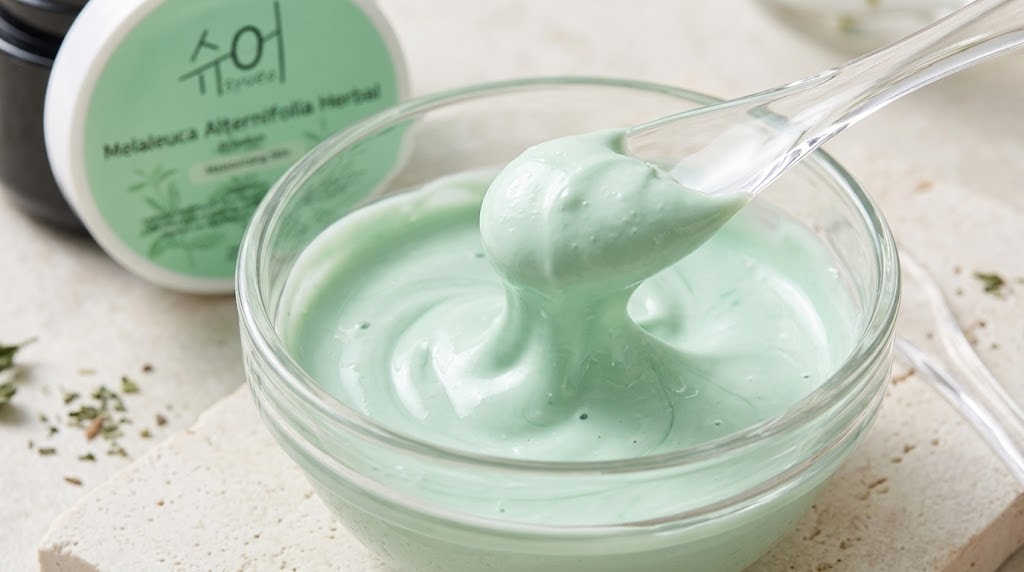
Follow these five clinical steps to mix and apply 24K Gold Modeling Mask, Silk Collagen Modeling Mask, or Melaleuca Alternifolia Herbal Modeling Mask with professional salon precision:
Step 1: Facial Cleansing & Ampoule Infusion Base
Thoroughly cleanse facial skin. Apply half to one full vial of Ceramide Ampoules Plus or your targeted peptide serum across face and neck. Optional tip: Apply a thin layer of moisturizing cream along eyebrows and hairline to prevent accidental sticking.
Step 2: Single-Pour Cold Liquid & 45-Second Whisk
Dispense 25g to 30g of modeling mask powder into a clean, flexible silicone bowl. Pour all 25ml to 33ml of chilled purified water or hydrosol in one single motion (strict 1:1 to 1:1.33 ratio). Do NOT add water gradually in drops. Whisk vigorously in broad circular and figure-eight strokes against the bowl wall with a flat spatula for 45 to 60 seconds until smooth, glossy, and lump-free.
Step 3: Upward Gliding & Thick Perimeter Beveling
Apply the paste quickly with upward strokes using the flat side of your spatula. Cover the cheeks first, followed by the chin, forehead, and nose bridge. Crucial aesthetician rule: Always build the outer perimeter (hairline, jawline, temples) to at least 2.5mm to 3mm thickness. Thin feathered edges dry out and crumble, whereas thick borders allow effortless single-sheet peeling.
Step 4: 15 to 20 Minute Hydrogel Occlusion Window
Recline comfortably and avoid excessive talking or facial movement while the sol-to-gel phase transition takes place. The mask cools the skin surface by 3°C to 5°C, delivers continuous moisture, and creates gentle downward pressure without tightening or pulling the skin uncomfortably.
Step 5: Bottom-Up Rolling Peel & Pure Hydrosol Wipe
After 15 to 20 minutes, touch the mask surface. When it feels completely dry, soft, and rubbery, loosen the thickened bottom border along your jawline. Peel gently upward from neck to forehead in one clean, continuous rubber sheet. Wipe minor edge residue with a toner-dampened cotton pad. Lock in hydration with your daily moisturizer. No harsh foaming cleanser is needed.
Frequently Asked Questions (FAQ)
Q.Can leftover mixed modeling mask in the bowl be saved or softened with more water?
No. The reaction between sodium alginate and calcium ions is an irreversible ionic chemical gelation. Once the polymeric egg-box structure forms and solidifies, adding water cannot reverse the bond or dissolve it back into a liquid sol. Any leftover mixture that sets in the bowl must be discarded into the trash bin (never wash thick paste down the sink drain, as it can solidify and clog plumbing).
Q.What should I do if the mask edges dried out and tore into small flaky pieces along my hairline?
If the outer perimeter was spread too thinly and dried into a chalky crust, do not scrape it with your fingernails. Simply saturate a cotton pad with hydrating toner or pure floral hydrosol, press it against the dry border for 5 to 10 seconds to rehydrate the alginate, and gently wipe it away in one smooth motion.
Q.Can I use tap water to mix modeling masks, or is purified water mandatory?
Chilled purified, distilled, or mineral water is strongly recommended. Tap water contains unpredictable levels of residual chlorine, calcium carbonates, and iron ions that can disrupt the calcium-alginate cross-linking rate and cause irritation on compromised or post-procedure skin barriers.
Q.Why should I apply an ampoule before the modeling mask rather than after removing it?
The cured alginate rubber creates an airtight barrier that halts trans-epidermal water loss and applies gentle downward hydrostatic pressure. Layering an ampoule like Ceramide Ampoules Plus beneath the mask drives active ceramides and peptides directly into hydrated cellular pathways. If applied only afterward, you miss the intense vacuum infusion window.
Q.How often should I do a salon modeling mask at home, and can oily acne skin use it?
A frequency of 1 to 2 times weekly is optimal for maintaining firm, glowing skin. Oily or acne-prone skin benefits greatly from formulas like Melaleuca Alternifolia Herbal Modeling Mask or Bamboo Charcoal Modeling Mask, as alginate naturally absorbs excess surface sebum and pore debris without stripping lipid barrier integrity.
Featured Formulations Mentioned In This Article
24K Gold Modeling Mask
Elemental 24K Colloidal Gold + Hydrolyzed Collagen + Sodium Hyaluronate + Vitamin E + Deep-Sea Alginate | 200g
Silk Collagen Modeling Mask
Hydrolyzed Silk Fibroin & Sericin + Hydrolyzed Collagen + Pure Rose Oil + Sodium Hyaluronate + Alginate | 150g
Melaleuca Alternifolia Herbal Modeling Mask
Tea Tree Essential Oil (Terpinen-4-ol) + Green Tea EGCG + Menthol TRPM8 Cryo-Calming + Centella | 200g
Bamboo Charcoal Modeling Mask
High-Adsorption Activated Bamboo Charcoal + Diatomaceous Earth + Lavender & Deep-Pore Purifying Alginate | 200g
Ceramide Ampoules Plus
Triple Ceramide Complex (NP, AP, NS) + Phytosterols + Horse Chestnut Microvascular Support + Aquaporin-3 Glyceryl Glucoside | 3ml × 6
Blue Copper Jelly Mask
Copper Tripeptide-1 (GHK-Cu) + Portulaca Oleracea + Dipotassium Glycyrrhizate in an Instant Cooling Hydrogel Matrix | 300g
Related Clinical Guides In This Pillar
Why Collagen Degrades After 25: The 4 Structural Aging Pathways, Multi-Peptide Signaling & Salon Occlusive Protocols
A clinical dermatology guide to Type I & III collagen depletion, dermal-epidermal junction (DEJ) flattening, neuromuscular expression lines, and photo-oxidative MMP-1 degradation. Discover how bio-signal peptides and salon-grade osmotic occlusion restore structural bounce.
Best Salon Masks 2026: Jelly Mask vs Modeling Mask Buying Guide & Top Picks for Glowing, Firm Skin
A complete buyer's and aesthetician guide to salon-grade face masks. Learn how hydrogel Jelly Masks compare to peel-off Alginate Modeling Masks, which formula matches your skin goals, and how to master the 1:1 to 1:1.33 salon infusion technique at home.
How a Damaged Skin Barrier Forms and How to Rebuild It: Stratum Corneum Lipid Science & Clinical Protocol
A damaged skin barrier forms when intercellular lipids (ceramides, cholesterol, and fatty acids) are stripped, spiking trans-epidermal water loss and neurogenic stinging.
Clinical Disclaimer: The topical protocols, biological mechanisms, and formulation data published in this journal are developed by the SYUEO Formulation Laboratory for aesthetic education and professional guidance. Individuals with chronic dermatological conditions (e.g. severe rosacea, open cystic lesions, or active eczema) should consult a certified dermatologist before starting any intensive active protocol.
© 2026 SYUEO Apothecary & Botanical Skincare Lab. All rights reserved. Registered Entity: SYUEO MALAYSIA EMPIRE (SSM Registration: 003593452-M).